Goal
Understand projection as the closest-point problem for a line or subspace, and learn why the residual lands perpendicular to the space you project onto.
Projection is the geometric move that turns noisy, off-subspace data into the best available approximation.
Motivation
Suppose a point does not lie on a line, or a data vector does not lie in the model space.
What is the nearest point that does?
That question appears everywhere in machine learning. Linear regression, least squares, and PCA all ask some version of it.
Projection is the clean answer.
Prerequisites
- Lesson 1: Vectors.
- Lesson 2: Matrices as Linear Transformations.
- Lesson 3: Matrix Multiplication.
- Lesson 5: Inverse Matrices.
- Lesson 7: Change of Basis.
- The dot product and the meaning of orthogonality.
Notation / Symbol Table
| Symbol | Plain-English name | Meaning |
|---|---|---|
| direction vector | The vector whose span we project onto. | |
| target vector | The vector being projected. | |
| projection | The closest point to on the line through . | |
| residual | The difference . | |
| matrix | A matrix whose columns span a subspace. | |
| column space | The subspace reached by all vectors of the form . |
Core Ideas
Projection onto a line
If is a direction vector, then the projection of onto the line spanned by is
This formula says:
- Measure how much of points along .
- Scale by that amount.
- Use that scaled vector as the closest point on the line.
Why the residual is orthogonal
Let
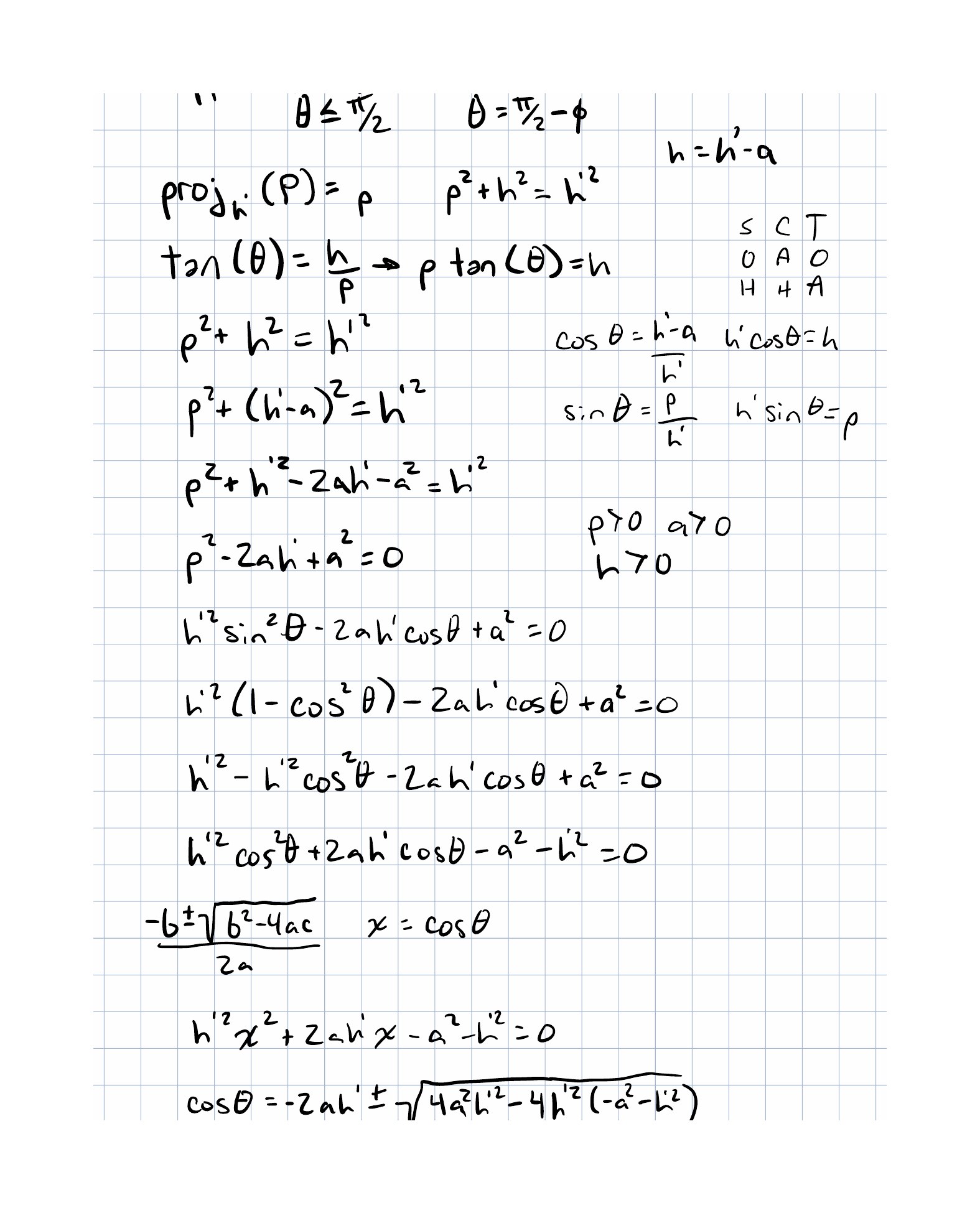
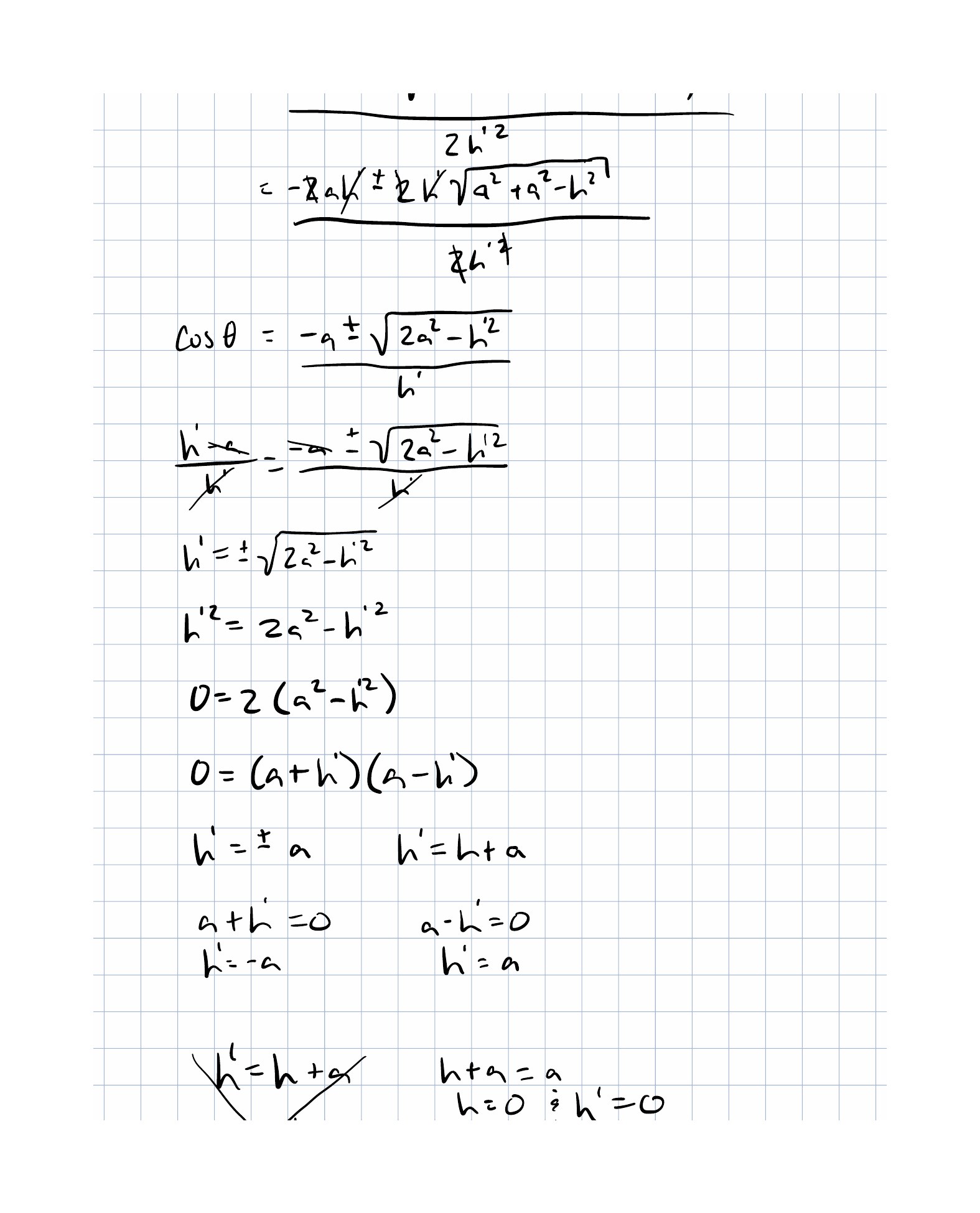
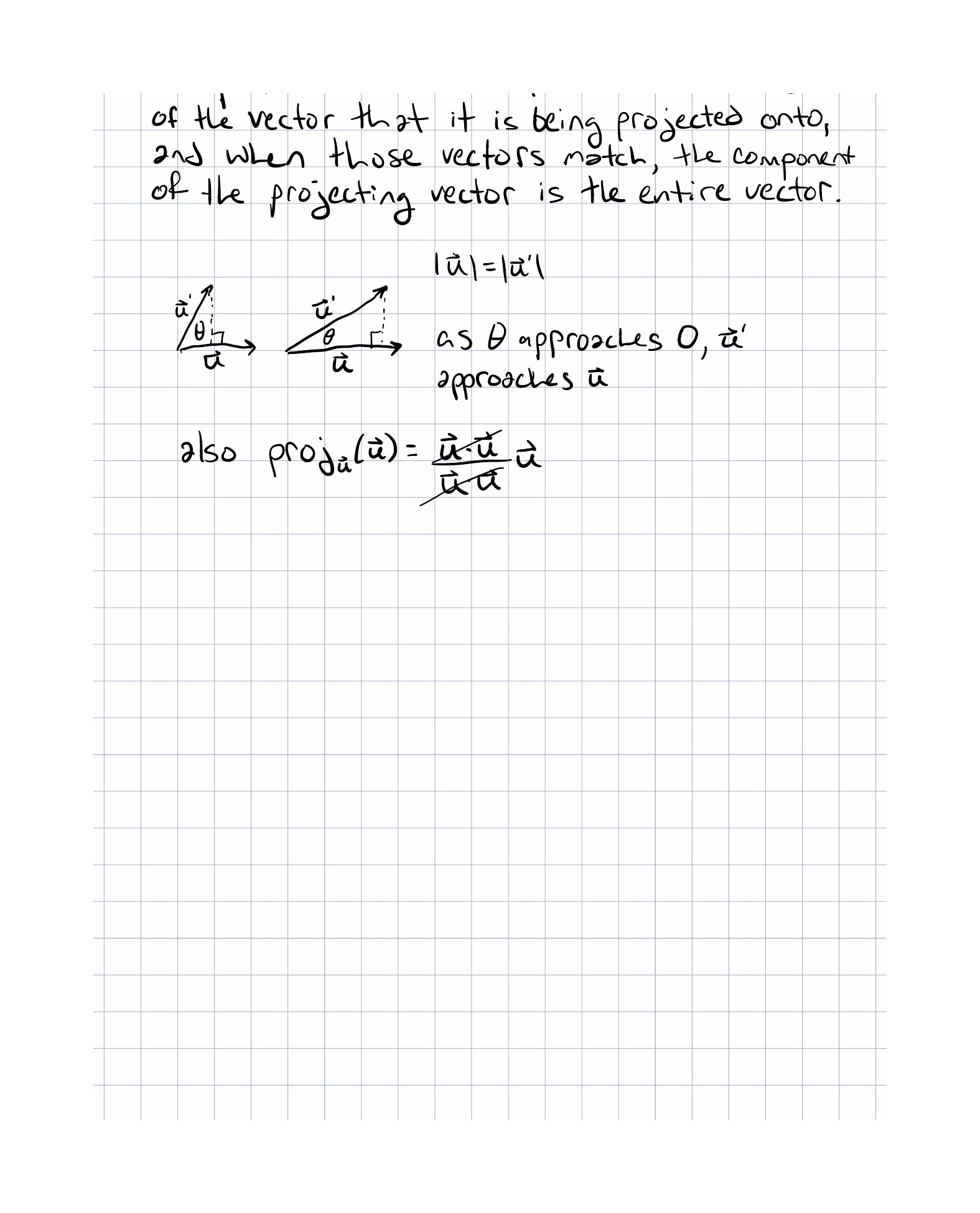
The shortest segment from a point to a line or plane hits the target at a right angle.
That is not an accident. If the residual had any component along the target space, you could move a little further in that direction and reduce the distance.
So the residual is perpendicular to the line or subspace you projected onto.
Projection onto a subspace
For a subspace spanned by several columns of a matrix , the same idea holds.
We want the point in closest to .
That closest point is the projection of onto .
The residual must be orthogonal to every column of .
That geometric condition becomes the algebraic condition used in least squares.
The preview of the matrix formula
If the columns of are independent, the projection onto the column space can be written as
You do not need to memorize that yet.
The important idea is that projection is the mechanism behind that formula, not the other way around.
Worked Example
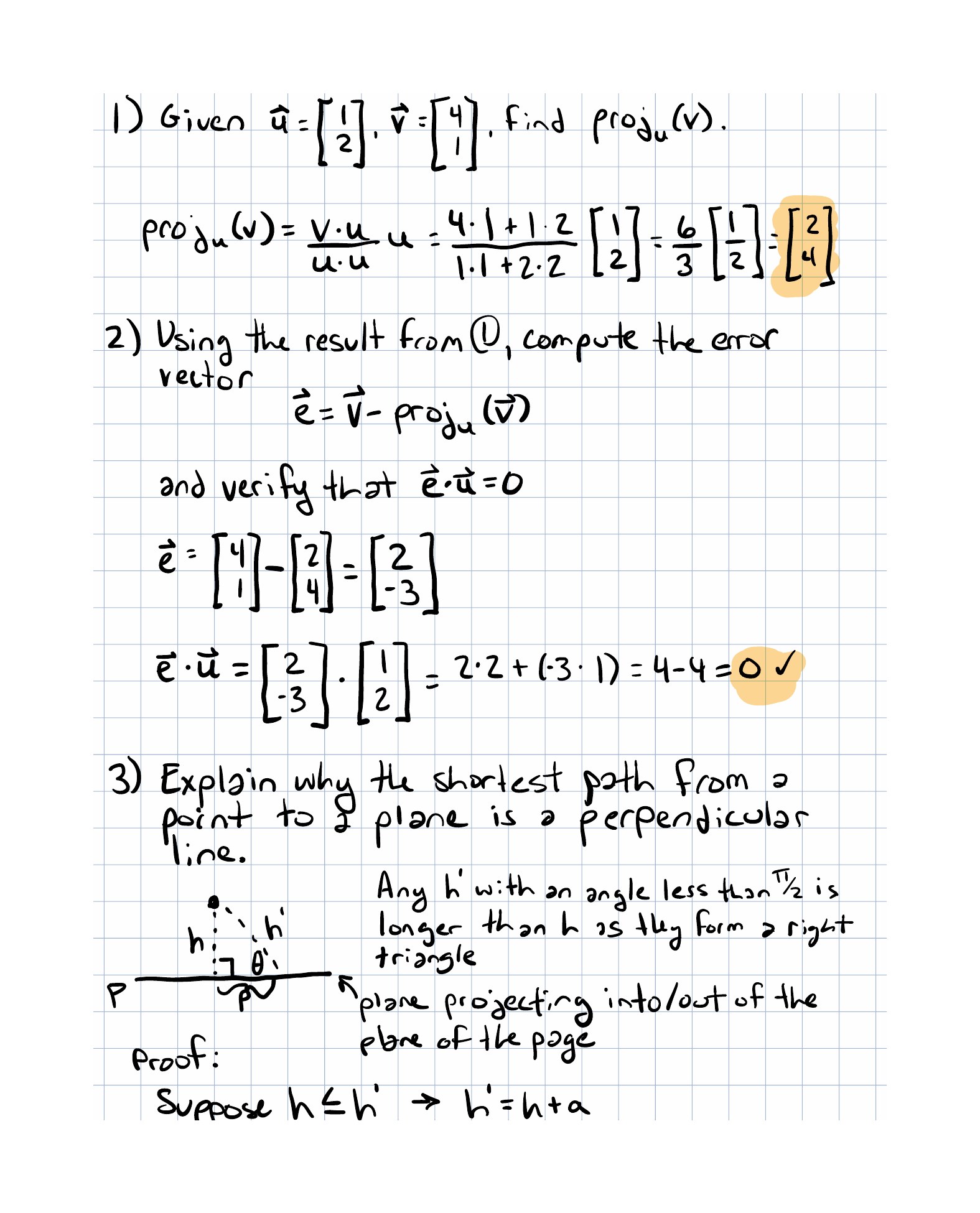
Let
Compute the projection:
So
The residual is
Check orthogonality:
That zero dot product is the signature of a correct projection.
Why This Shows Up In ML
Projection is the geometry behind:
- least squares,
- linear regression,
- PCA,
- low-rank approximation,
- feature compression.
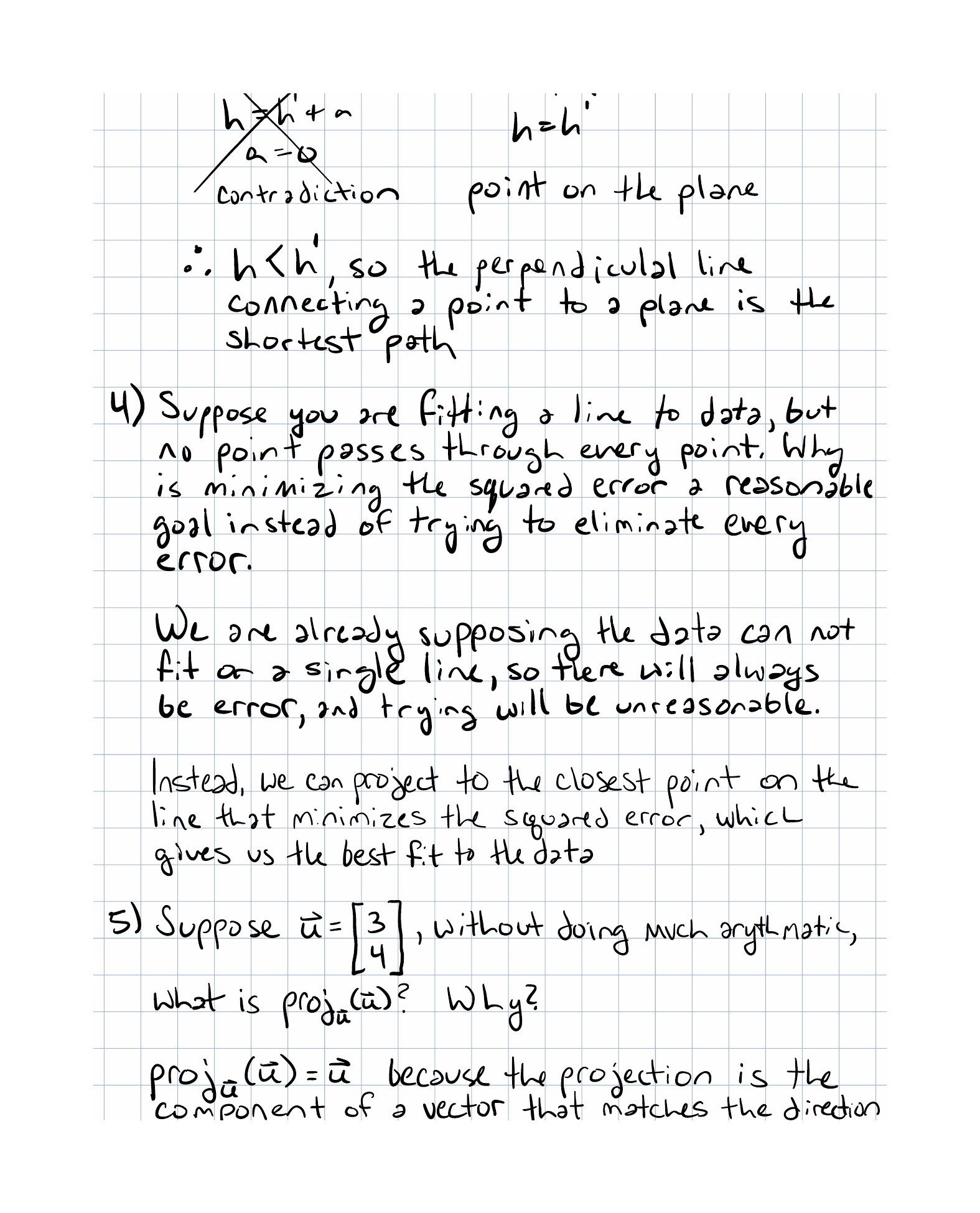
Whenever a model cannot match the data exactly, we usually ask for the closest match instead.
Projection is the mathematical word for “closest match in a subspace.”
Common Confusions
- Projection is not always vertical. It depends on the target line or subspace.
- The residual is not the projection itself; it is the leftover error.
- If the vector already lies in the subspace, projection changes nothing.
- Orthogonality is the condition that makes the closest point special.
- Projection onto a subspace uses the same logic as projection onto a line, just with more directions.
Exercises
-
Let
Compute .
-
Using your answer from Exercise 1, compute the residual and verify that .
-
Explain, in your own words, why the shortest path from a point to a plane must meet the plane at a right angle.
-
Why is minimizing squared error a better goal than demanding zero error when the data is noisy?
-
If , what is ?
Implementation Exercise
Write a TypeScript helper that projects one 2D vector onto another and returns both the projection and the residual.
An outline could look like this:
type Vector2 = [number, number];

type ProjectionResult = {
  projection: Vector2;
  residual: Vector2;
};

function dot(a: Vector2, b: Vector2): number;
function projectOntoVector(v: Vector2, u: Vector2): ProjectionResult;
The helper should:
- compute the dot products,
- scale the direction vector correctly,
- subtract to get the residual,
- make it easy to check orthogonality.
Reflection Questions
- What makes a projection the “closest” point rather than just some point on the line?
- Why does orthogonality show up in the residual?
- Where in machine learning would projection replace an exact solve?
- Which step in the formula most needs a local reminder?
- What changed when the problem moved from a line to a subspace?
Next Lesson
Next: Least Squares.
The bridge is immediate: least squares is projection when the target space is the column space of a matrix.
Completed Exercises
Handwritten work submitted after completing this lesson.